
Have you ever watched a movie or read a novel where you knew something important that the main character didn’t? That feeling of suspense and anticipation is called dramatic irony. If you’re wondering what is dramatic irony in literature, it’s a literary device where the audience has more knowledge about a situation than one or more characters in the story.
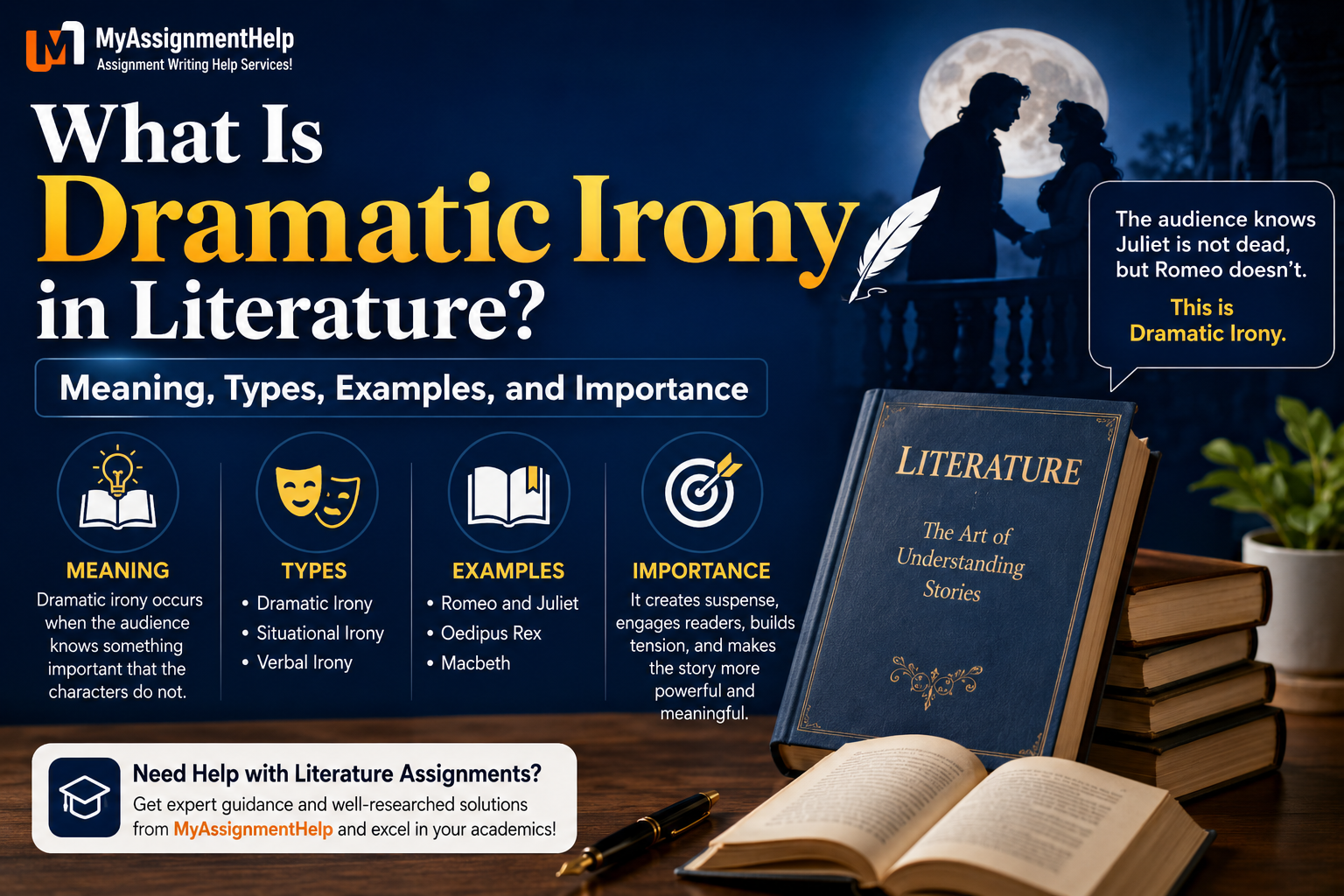
Dramatic irony is widely used in novels, plays, films, and short stories to create suspense, emotional engagement, and deeper meaning. Literature students often study this concept because it plays a significant role in analyzing classic and modern literary works. Understanding dramatic irony can also improve essay writing and literary criticism.
If you’re struggling with literary analysis or assignments, MyAssignmentHelp offers expert guidance to help you understand complex literary devices with ease.
What Is Dramatic Irony in Literature?
Dramatic irony occurs when readers or audiences know a crucial piece of information that a character is unaware of. This gap in knowledge creates tension, excitement, humor, or even tragedy as readers anticipate how the character will eventually discover the truth.
Unlike simple surprises, dramatic irony allows the audience to predict possible outcomes while watching the characters unknowingly move toward them.
Definition
Dramatic irony is a literary technique in which the audience understands the true circumstances of a situation before the characters do.
This technique is especially common in tragedies, mysteries, thrillers, and romantic comedies.
Why Is Dramatic Irony Important in Literature?
Authors use dramatic irony to make stories more engaging and emotionally powerful. Instead of simply telling readers what happens, they create an interactive reading experience where the audience becomes emotionally invested.
Some major benefits include:
- Builds suspense throughout the story.
- Creates emotional depth and tension.
- Keeps readers engaged until the truth is revealed.
- Enhances character development.
- Makes plot twists more meaningful.
Types of Irony in Literature
To fully understand what is dramatic irony in literature, it’s helpful to compare it with other common forms of irony.
1. Dramatic Irony
The audience knows something that the character does not.
Example:
In Shakespeare’s Romeo and Juliet, the audience knows Juliet is only sleeping due to a potion, but Romeo believes she has died.
2. Situational Irony
The outcome is the opposite of what readers expect.
Example:
A fire station catching fire.
3. Verbal Irony
A character says something but means the opposite.
Example:
Saying “What lovely weather!” during a storm.
Famous Examples of Dramatic Irony
Romeo and Juliet
One of the most famous examples occurs near the ending. Readers know Juliet’s apparent death is part of a plan, but Romeo does not. His misunderstanding leads to the tragic conclusion.
Oedipus Rex
Throughout the play, the audience gradually realizes Oedipus himself is responsible for the crime he seeks to solve, while he remains unaware until the climax.
Macbeth
The audience often understands the consequences of Macbeth’s ambition before he fully realizes the destruction his actions will cause.
How Dramatic Irony Creates Suspense?
Suspense arises because readers know something important that the protagonist doesn’t. Every decision the character makes increases tension because the audience anticipates the inevitable revelation.
For example:
- A detective unknowingly trusts the criminal.
- A hero enters a dangerous room while readers know the villain is hiding inside.
- A student celebrates success before learning they misunderstood the results.
This knowledge gap keeps readers emotionally involved.
Difference Between Dramatic Irony and Suspense
Although related, they are not identical.
| Dramatic Irony | Suspense |
|---|---|
| Audience knows more than the characters. | Audience may not know what happens next. |
| Creates anticipation. | Creates uncertainty. |
| Relies on hidden information from characters. | Relies on unpredictable events. |
How Students Can Identify Dramatic Irony?
When analyzing literature, ask yourself:
- Does the audience know something important?
- Is the character unaware of this information?
- Does this difference create tension or emotion?
- Does the revelation significantly affect the story?
If the answer is yes, you’re likely observing dramatic irony.
Common Mistakes Students Make
Many students confuse dramatic irony with other literary devices. Avoid these common errors:
- Mixing dramatic irony with situational irony.
- Assuming every plot twist is dramatic irony.
- Ignoring the audience’s knowledge.
- Forgetting to explain its effect on the reader.
Always support your analysis with evidence from the text.
Tips for Writing About Dramatic Irony
If you’re writing an assignment on literary devices:
- Define dramatic irony clearly.
- Introduce the literary work.
- Explain what the audience knows.
- Describe what the character doesn’t know.
- Discuss how it influences the plot and reader experience.
- Include quotations where appropriate.
A well-structured analysis demonstrates critical thinking and improves academic performance.
Need Help with Literature Assignments?
Understanding literary concepts like dramatic irony can be challenging, especially when analyzing classic texts. Whether you’re studying Shakespeare, Greek tragedies, or modern fiction, expert academic support can make your assignments more insightful.
MyAssignmentHelp provides professional literature assignment assistance, helping students with literary analysis, essays, research papers, and coursework. Experienced subject experts ensure well-researched, plagiarism-free, and academically sound solutions tailored to university standards.
Conclusion
Understanding what is dramatic irony in literature is essential for analyzing stories, plays, and novels. By allowing readers to know more than the characters, dramatic irony creates suspense, emotional depth, and memorable storytelling. From Romeo and Juliet to Oedipus Rex, this literary device continues to captivate audiences across generations. If you need expert assistance with literature assignments or literary analysis, MyAssignmentHelp is here to help you achieve academic success.


