
Students often face multiple assignments, tight deadlines, exams, and other academic responsibilities. When the workload feels overwhelming, it can be tempting to make excuses instead of starting the task. Common statements such as “I will do it tomorrow,” “I don’t have enough time,” or “The assignment is too difficult” may provide temporary relief but can create greater pressure later. This is where understanding the reasons behind these excuses becomes important.
What Are Dumb Excuses for Assignments?
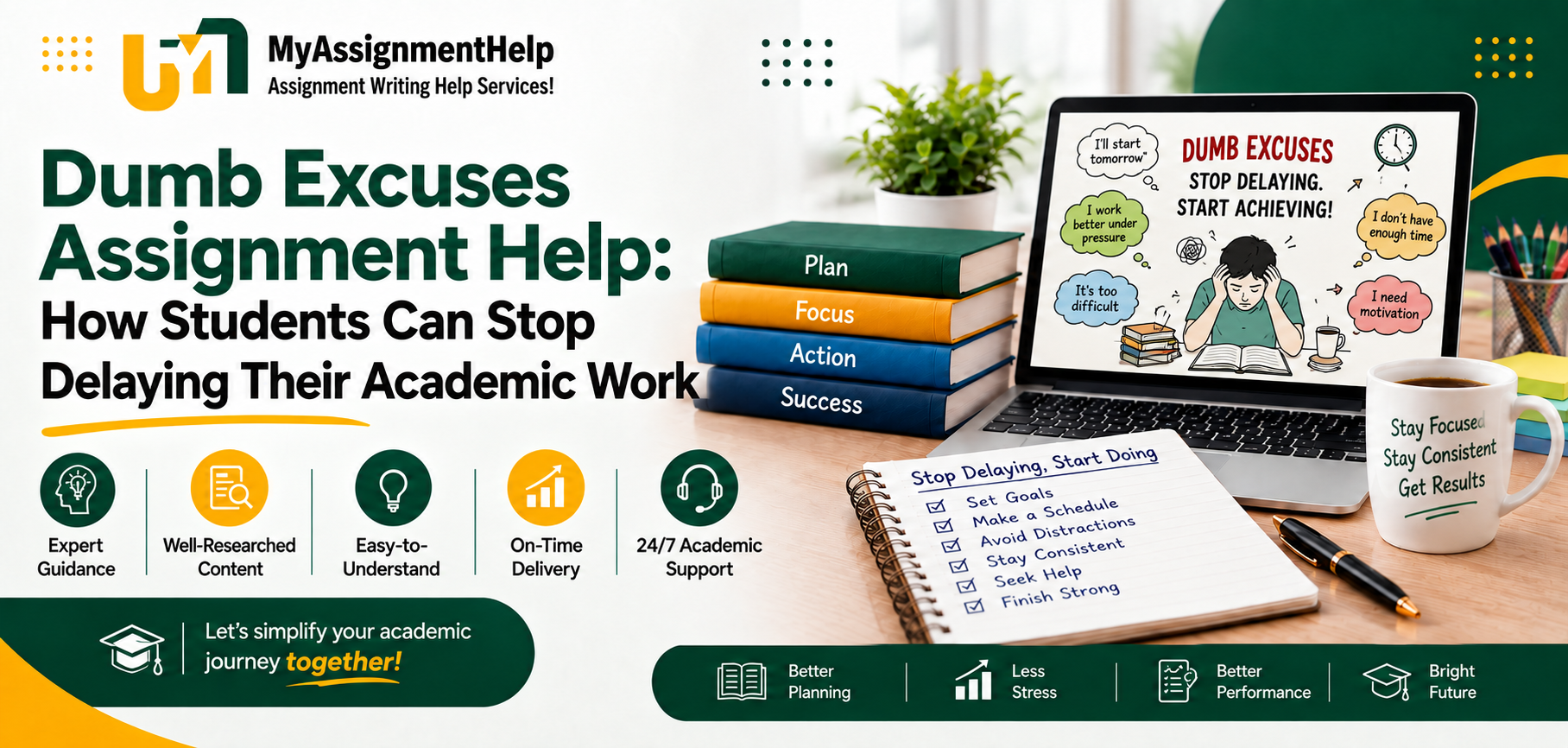
Dumb excuses are often simple reasons students give themselves or others for avoiding academic work. Forgetting the deadline, waiting for the “right mood,” blaming a lack of motivation, or repeatedly saying there is not enough time are common examples. Although some difficulties are genuine, repeatedly relying on excuses can become a habit that affects academic progress.
Students may also use excuses to protect their confidence when they are worried about failing. Instead of facing a difficult task, they may attribute possible poor performance to external circumstances. Recognising this pattern can help students replace avoidance with practical action.
Why Do Students Make Excuses?
There can be several reasons behind assignment-related excuses. Procrastination is one of the most common. A large or complicated assignment may appear difficult, causing students to postpone it. Poor time management can create another problem because students may underestimate how long research, drafting, editing, and referencing will take.
A lack of confidence can also contribute. Students who do not understand a topic may avoid beginning because they are unsure about how to approach it. In other situations, distractions such as social media, gaming, entertainment, or unnecessary browsing can reduce productive study time.
How Can Students Stop Making Excuses?
The first step is to identify the actual problem. If an assignment seems too large, divide it into smaller sections. Start by reading the question, identifying the requirements, collecting sources, creating an outline, and then writing one section at a time.
Creating a realistic schedule can also make academic work easier. Instead of waiting until the deadline is close, students can assign specific periods for research, writing, proofreading, and final submission.
Students should also ask for guidance when they genuinely do not understand a topic. Academic support can help clarify difficult concepts, explain assignment requirements, improve structure, and provide useful study direction.
How Can Assignment Help Be Useful?
Reliable academic assistance can be valuable when students are struggling with complicated subjects or approaching deadlines. MyAssignmentHelp.co.in offers support across different academic areas, including essays, dissertations, research papers, and case studies. Its website states that its services include timely academic assistance and that delivered work is intended for individual research, reference, or study purposes.
Students can use appropriate academic support to understand difficult topics, improve their writing approach, and learn how to organise assignments more effectively. The goal should be to use assistance as a learning resource rather than relying on excuses or avoiding academic responsibilities.
Final Thoughts
Making excuses may seem like an easy way to escape assignment pressure, but it rarely solves the underlying problem. Students can make better progress by identifying what is preventing them from starting, breaking large tasks into manageable steps, planning their time, and seeking guidance when necessary. With consistent effort and suitable academic support, students can reduce procrastination and approach their assignments with greater confidence.


