
Person-centred nursing Australia is an important approach to healthcare that places patients’ needs, preferences, values, and individual experiences at the centre of care. Instead of focusing only on medical conditions, nurses consider each patient’s physical, emotional, social, and cultural needs. This approach supports better communication, patient dignity, and shared decision-making.
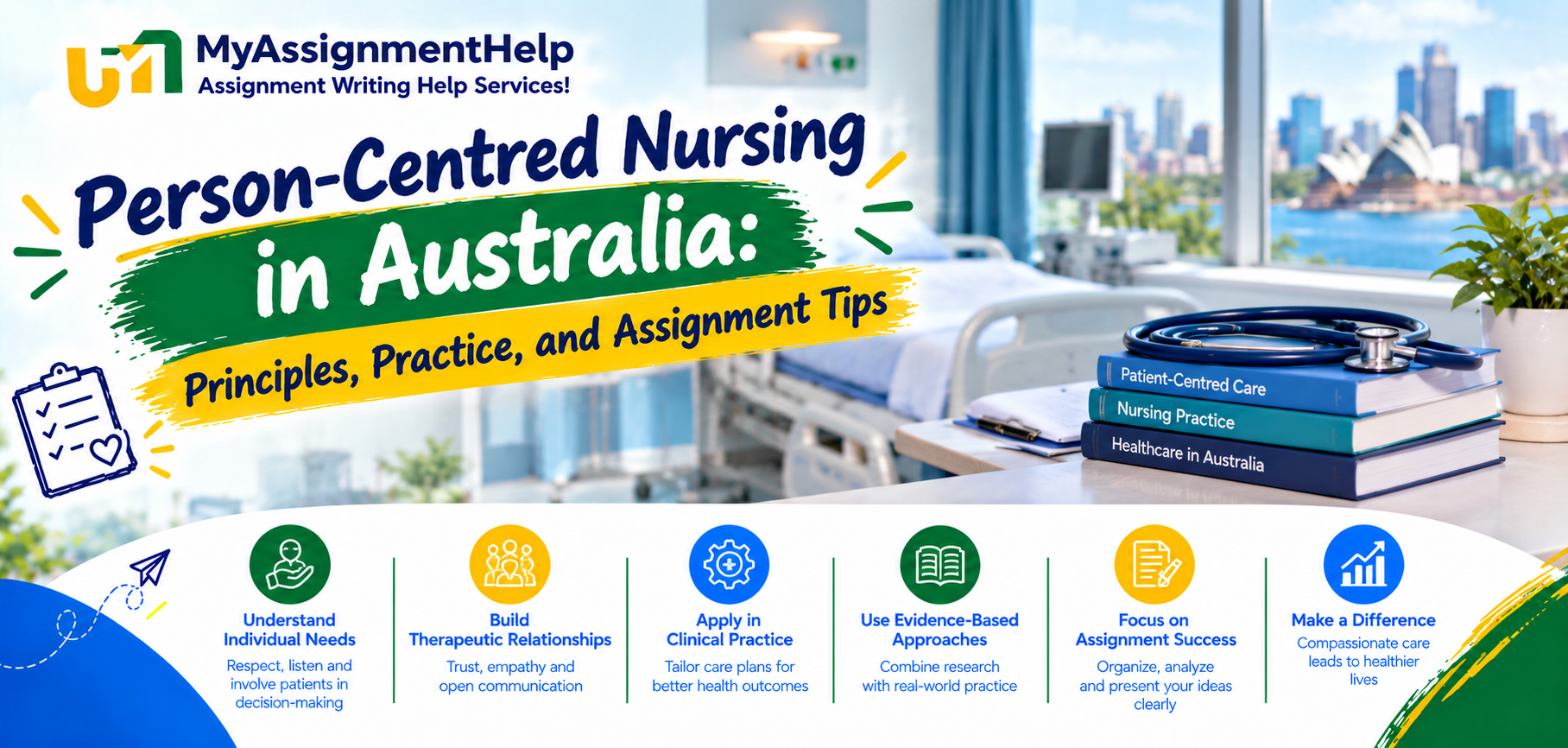
For nursing students in Australia, understanding person-centred care is essential when preparing clinical assessments, reflective essays, and case studies. Students must also understand professional standards, ethical responsibilities, and evidence-based practices to explain how nurses deliver safe and effective care.
What Is Person-Centred Nursing in Australia?
Person-centred nursing is a healthcare approach that respects patients as individuals and involves them in decisions about their treatment and care. It recognises that every patient has unique preferences, beliefs, cultural backgrounds, and healthcare needs.
For example, a nurse caring for an older patient should explain treatment options in understandable language, listen to the patient’s concerns, and consider their preferences when developing a care plan.
In Australian healthcare settings, person-centred care is relevant to hospitals, aged-care facilities, community health services, and general practice clinics.
Why Is Person-Centred Care Important in Nursing?
Person-centred care improves the relationship between patients and healthcare professionals. It also helps nurses identify individual needs and provide appropriate support.
Key Benefits
- Improved communication: Encourages patients to share their concerns and ask questions.
- Greater patient involvement: Supports informed choices and shared decision-making.
- Respect for cultural diversity: Recognises different beliefs, traditions, and communication needs.
- Enhanced patient safety: Helps nurses identify concerns and communicate important information.
- Better care experiences: Promotes dignity, trust, comfort, and emotional support.
For instance, when supporting an Aboriginal or Torres Strait Islander patient, a nurse should provide culturally safe care, listen respectfully, and consider the patient’s preferences and community context.
How Do Australian Nursing Standards Support Person-Centred Care?
Australian nurses must understand the professional standards and responsibilities that guide their practice. The Nursing and Midwifery Board of Australia (NMBA) establishes professional standards for nurses, including expectations related to safe, ethical, and person-centred practice.
NMBA Nursing Assignment: Professional Responsibilities
An NMBA nursing assignment may require students to explain how registered nurses demonstrate professional accountability, communicate effectively, maintain confidentiality, and respect patients’ rights.
The NMBA Registered Nurse Standards for Practice provide a useful framework for analysing clinical situations. Students can connect these standards to practical examples, such as involving patients in care planning and documenting their preferences accurately.
AHPRA Nursing Assignment: Ethics and Registration
The Australian Health Practitioner Regulation Agency (AHPRA) supports the regulation of registered health practitioners in Australia. Nursing students writing an AHPRA nursing assignment can explore professional registration, ethical responsibilities, and the importance of practising within appropriate professional requirements.
Students should distinguish AHPRA’s regulatory role from the NMBA’s role in setting nursing standards.
How Does Evidence-Based Nursing Improve Patient Care?
Evidence-based nursing Australia combines the best available research evidence with clinical expertise and the patient’s preferences, values, and circumstances.
For example, a nurse developing a wound-care plan should consider current clinical guidelines, assess the patient’s condition, and discuss suitable care options with the patient.
Students can strengthen nursing assignments by:
- Using recent peer-reviewed research and reputable Australian healthcare guidelines.
- Explaining how evidence supports a particular nursing intervention.
- Applying professional standards to realistic clinical scenarios.
- Considering patient preferences, cultural safety, and informed consent.
- Referencing sources accurately using the required academic style.
This approach helps students demonstrate critical thinking rather than simply describing nursing procedures.
How Can Students Write a Strong Person-Centred Nursing Assignment?
A well-structured assignment should define person-centred care, explain its importance, and connect nursing theory with practical examples.
Students can organise their work into an introduction, discussion of core principles, application to an Australian clinical setting, critical analysis, and conclusion.
Use credible sources such as NMBA professional standards, Australian Commission on Safety and Quality in Health Care resources, and relevant academic journals. Explain how each source supports your argument and acknowledge limitations where appropriate.
MyAssignmentHelp.co.in can be explored for academic guidance on organising nursing assignments, understanding assessment requirements, and improving the clarity of academic writing. Students should use such support responsibly and ensure their submitted work reflects their own understanding and follows their institution’s academic integrity policies.
Frequently Asked Questions
What does person-centred nursing mean in Australia?
It means providing care that respects each patient’s preferences, values, cultural background, needs, and participation in healthcare decisions.
Why is person-centred care important for Australian nursing students?
It helps students understand ethical practice, patient communication, cultural safety, and the professional responsibilities expected in Australian healthcare settings.
What is the difference between AHPRA and NMBA?
AHPRA supports the national registration and regulation system for health practitioners, while the NMBA regulates nursing and midwifery professions within that system and establishes relevant professional standards.
How does evidence-based nursing support person-centred care?
It combines research evidence and clinical expertise with individual patient preferences to guide safe, appropriate, and effective care.
Where can students find reliable information for nursing assignments in Australia?
Students can consult NMBA standards, AHPRA resources, Australian Commission on Safety and Quality in Health Care publications, peer-reviewed journals, and their university library.
Conclusion
Person-centred nursing Australia is fundamental to respectful, safe, and effective healthcare. By understanding professional standards, applying evidence-based nursing principles, and involving patients in decisions, nursing students can develop stronger clinical reasoning and academic writing skills. Connecting theory with realistic Australian healthcare examples also makes nursing assignments more relevant, clear, and informative.


