
Writing a high-quality legal memo is one of the most important skills for any law student aiming for top grades. It is not just about knowing the law but about presenting it in a structured, clear, and professional way. Many students struggle with turning complex legal facts into a well-organized document, especially when working under pressure. This is where understanding the correct structure—and getting support like legal assignment help—can make a huge difference.
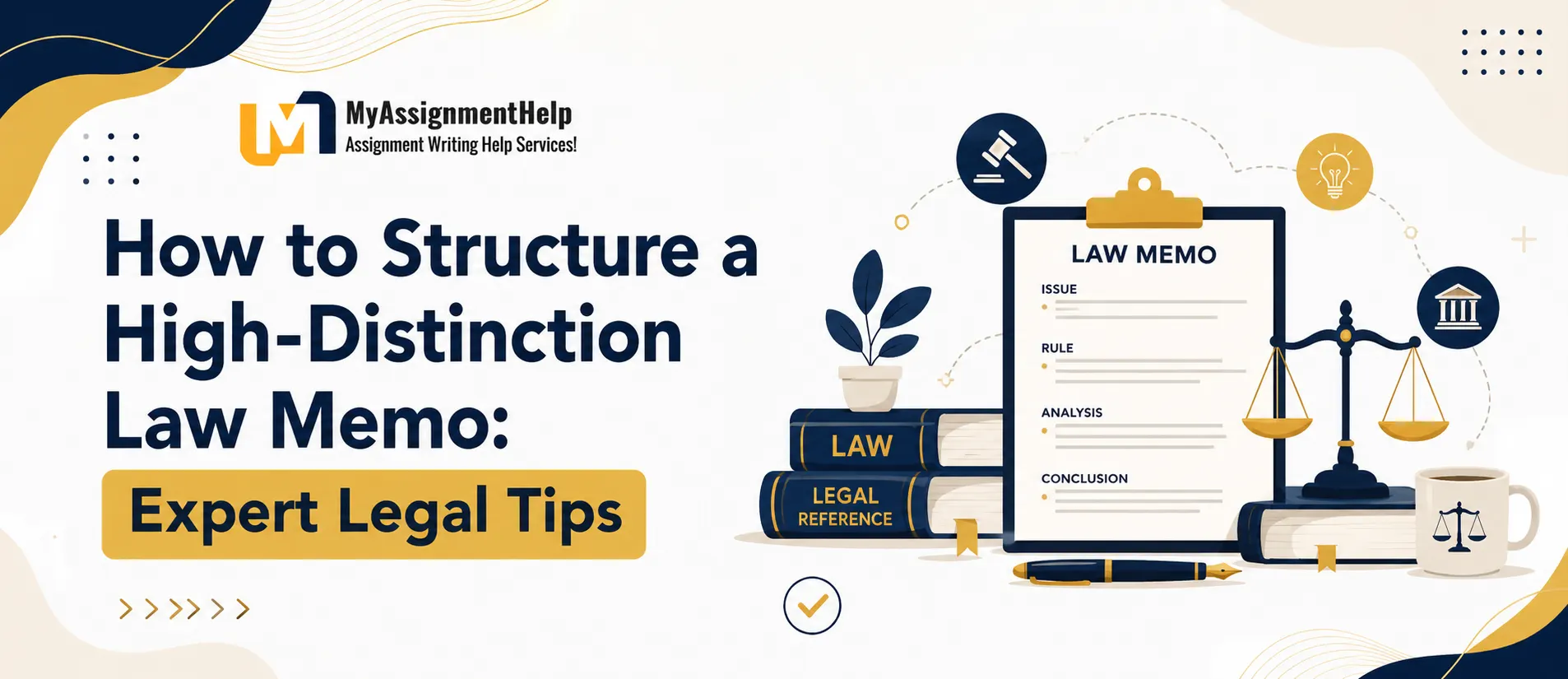
In this guide, we break down exactly how to structure a high-distinction law memo and how expert techniques can help you achieve academic success.
What is a Legal Memo?
A legal memo is a formal document that analyzes a legal issue and provides an objective conclusion based on facts and law. Unlike essays, it is not persuasive or opinion-based. Instead, it focuses on logical reasoning and legal accuracy.
Many students also seek Business Law Case Study Writing Help, Criminal Law Assignment Help, and Company Law Assignment Help when they struggle to apply legal principles correctly in memos.
A strong memo shows that you can think like a lawyer—clear, structured, and precise.
Why Structure Matters in a High-Distinction Memo
Structure is the backbone of a legal memo. Even if your legal knowledge is strong, poor organization can reduce your marks significantly. Law examiners look for clarity, logical flow, and professional formatting.
A well-structured memo helps the reader quickly understand:
- The legal issue
- The relevant facts
- The legal rules
- The final conclusion
For complex topics like commercial disputes or tax issues, students often rely on Commercial Law Case Study Help or Taxation Law Assignment Help to ensure accuracy and clarity.
Standard Law Memo Structure
1. Heading
Include:
- To
- From
- Date
- Subject
Example: Re: Legal Liability in Contract Dispute
2. Issue Statement
Clearly define the legal question. Avoid vague wording and focus on precise legal terminology.
3. Brief Answer
Provide a short and direct conclusion (Yes/No/Likely). This shows your ability to summarize legal reasoning quickly.
4. Facts
Only include legally relevant facts. Avoid emotional language or unnecessary details.
5. Legal Analysis
This is the most important section. Apply legal rules to facts using IRAC or MIRAT structure. Strong analysis is essential for a high distinction.
6. Conclusion
Summarize findings and provide practical recommendations.
Using IRAC for Better Legal Writing
IRAC (Issue, Rule, Application, Conclusion) is widely used in law assignments. It helps students organize arguments logically and clearly.
However, many Australian universities also prefer MIRAT, which emphasizes Material Facts before legal rules. Choosing the right structure can improve your grades significantly.
Students often use legal assignment help services to understand how to apply these frameworks correctly in real case scenarios.
Expert Tips for Writing a High-Scoring Legal Memo
- Keep language formal and objective
- Avoid emotional or biased statements
- Use headings for clarity
- Support every legal claim with authority
- Stay within word limits
- Proofread carefully for citation accuracy
If you’re handling complex subjects like business disputes or financial law, services like Commercial Law Case Study Help and Taxation Law assignment help can provide structured guidance.
Why Students Use MyAssignmentHelp.co.in
Many law students turn to Myassignmenthelp.co.in when they struggle with tight deadlines or difficult legal topics. The platform provides expert academic support for:
- Business Law Case Study Writing Help
- Criminal Law Assignment Help
- Company Law Assignment Help
- Commercial Law Case Study Help
- Taxation Law assignment help
These services help students understand legal concepts better and improve their writing structure for high grades.
FAQs
Q1: What is the ideal structure of a legal memo?
A legal memo includes a heading, issue, brief answer, facts, legal analysis, and conclusion.
Q2: How can I improve my law memo writing?
Focus on clarity, use IRAC/MIRAT structure, and avoid unnecessary details.
Q3: Is legal assignment help useful for law students?
Yes, it helps students understand complex topics and improve academic writing quality.
Q4: What makes a legal memo high distinction?
Strong structure, accurate legal analysis, clear reasoning, and proper citation style.
Conclusion
A high-distinction legal memo is built on structure, clarity, and strong legal reasoning. By following a proper format and applying frameworks like IRAC or MIRAT, students can significantly improve their academic performance. With additional support from Myassignmenthelp.co.in, learners can gain expert guidance in areas like Business Law Case Study Writing Help, Criminal Law Assignment Help, and other legal subjects.
Mastering memo writing is not just about passing exams—it is about developing professional legal thinking skills that will benefit your entire career.


