
Writing a narrative essay is more than simply telling a story. It allows students to express personal experiences, emotions, and lessons in a structured and engaging way. Unlike argumentative or analytical essays, a narrative essay focuses on storytelling while maintaining a clear purpose. Whether you’re writing about a memorable event, a life-changing experience, or a fictional scenario, understanding the right structure and techniques is essential.
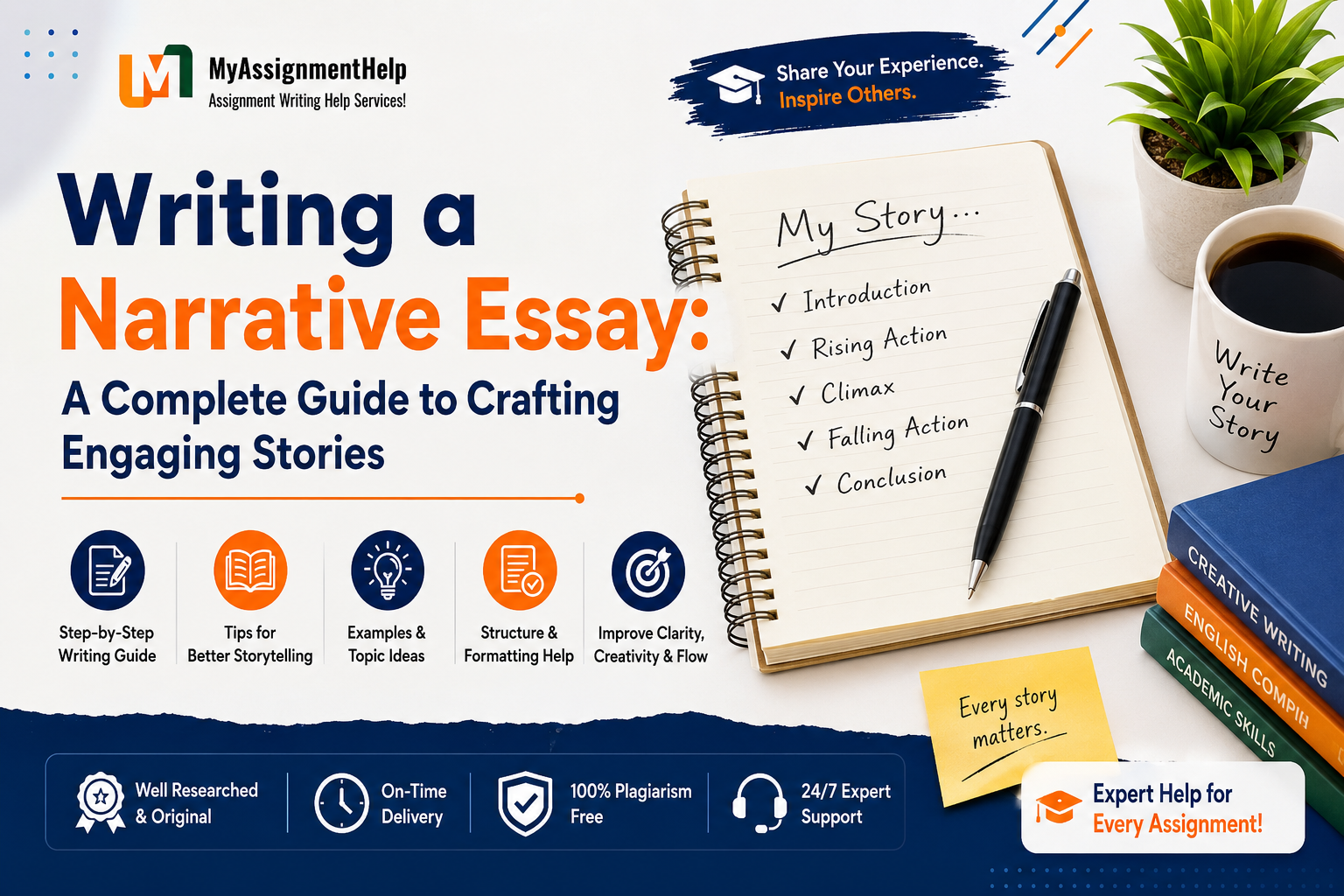
Many students struggle to organize their ideas or create compelling narratives. With the right approach and expert guidance from MyAssignmentHelp.co.in, you can develop a well-written narrative essay that captures your reader’s attention from beginning to end.
What Is a Narrative Essay?
A narrative essay is a form of academic writing where the writer shares a story to convey a specific message or lesson. It usually follows a chronological order and includes characters, setting, conflict, climax, and resolution.
Unlike research papers, narrative essays emphasize personal voice, creativity, and descriptive language while maintaining academic standards.
Why Is Writing a Narrative Essay Important?
Writing narrative essays helps students:
- Improve creative writing skills
- Develop critical thinking
- Enhance storytelling abilities
- Build confidence in expressing ideas
- Strengthen grammar and vocabulary
- Learn effective organization techniques
These skills are valuable not only in academics but also in professional communication.
Structure of a Narrative Essay
A well-organized narrative essay generally follows this format:
1. Introduction
The introduction should capture the reader’s interest with an engaging hook. Introduce the main event or experience and conclude with a thesis statement explaining the purpose of the story.
2. Body Paragraphs
The body contains the main events in chronological order.
Include:
- Setting
- Characters
- Main conflict
- Important events
- Emotional experiences
- Climax
Each paragraph should naturally transition into the next.
3. Conclusion
Summarize the experience and explain the lesson learned. Avoid introducing new information in the conclusion.
Essential Elements of Writing a Narrative Essay
Strong Introduction
Begin with:
- A surprising fact
- A question
- Dialogue
- A vivid description
- An interesting quote
Descriptive Language
Use sensory details that appeal to:
- Sight
- Sound
- Smell
- Taste
- Touch
This makes the story more immersive.
Clear Sequence
Present events logically to help readers easily follow the storyline.
Personal Reflection
Explain why the experience mattered and what you learned from it.
Tips for Writing a Narrative Essay
Choose a Meaningful Topic
Select an experience that had a significant impact on your life.
Examples include:
- First day at college
- A family vacation
- Overcoming fear
- Winning a competition
- Learning a valuable lesson
Create an Outline
Before writing, prepare an outline including:
- Introduction
- Main events
- Climax
- Conclusion
Planning saves time and improves flow.
Use First-Person Perspective
Narrative essays are commonly written using:
- I
- Me
- My
- We
This creates a personal connection with readers.
Show, Don’t Tell
Instead of writing:
“I was nervous.”
Write:
“My hands trembled as I stepped onto the stage.”
This paints a stronger picture.
Maintain a Consistent Tone
Whether humorous, emotional, or inspirational, keep the tone consistent throughout the essay.
Common Mistakes to Avoid
Students often make these errors:
- Weak introduction
- Poor organization
- Lack of descriptive details
- Too much unnecessary information
- Grammar mistakes
- No clear lesson or reflection
- Repetitive sentences
Editing carefully can eliminate these problems.
Narrative Essay Example Topics
Some excellent narrative essay ideas include:
- My biggest achievement
- A life-changing experience
- An unforgettable teacher
- My first job interview
- A lesson from failure
- A memorable journey
- The happiest day of my life
- A difficult decision
- An act of kindness
- My greatest inspiration
How to Improve Your Narrative Essay?
To make your essay stronger:
- Read your essay aloud.
- Check grammar and punctuation.
- Replace weak words with vivid vocabulary.
- Add transitions between paragraphs.
- Remove unnecessary details.
- Ask someone to review your work.
Revision is one of the most important stages of writing.
Why Choose MyAssignmentHelp.co.in?
Students across the globe trust MyAssignmentHelp.co.in because of its commitment to academic excellence. Whether you need help brainstorming ideas, structuring your essay, editing drafts, or improving grammar, our experienced academic writers provide personalized assistance tailored to your requirements.
Our services include:
- Expert essay writing support
- Original and plagiarism-free content
- Timely delivery
- Professional proofreading
- Affordable pricing
- 24/7 customer support
- Assistance across multiple academic subjects
With expert guidance, writing a compelling narrative essay becomes much easier and more enjoyable.
Conclusion
Writing a narrative essay is an opportunity to share meaningful experiences while developing essential writing skills. By choosing an engaging topic, organizing your ideas effectively, using descriptive language, and reflecting on your experiences, you can create an essay that leaves a lasting impression on readers. If you need professional assistance, MyAssignmentHelp.co.in is here to help you craft high-quality narrative essays that meet academic standards and boost your confidence in writing.


