
Gothic literature is a fascinating genre that combines mystery, horror, romance, supernatural elements, and psychological tension. It emerged in the eighteenth century and became associated with dark settings, mysterious characters, suspenseful events, and themes such as fear, isolation, death, madness, and the conflict between good and evil. Horace Walpole’s The Castle of Otranto is widely regarded as an early foundational Gothic novel.
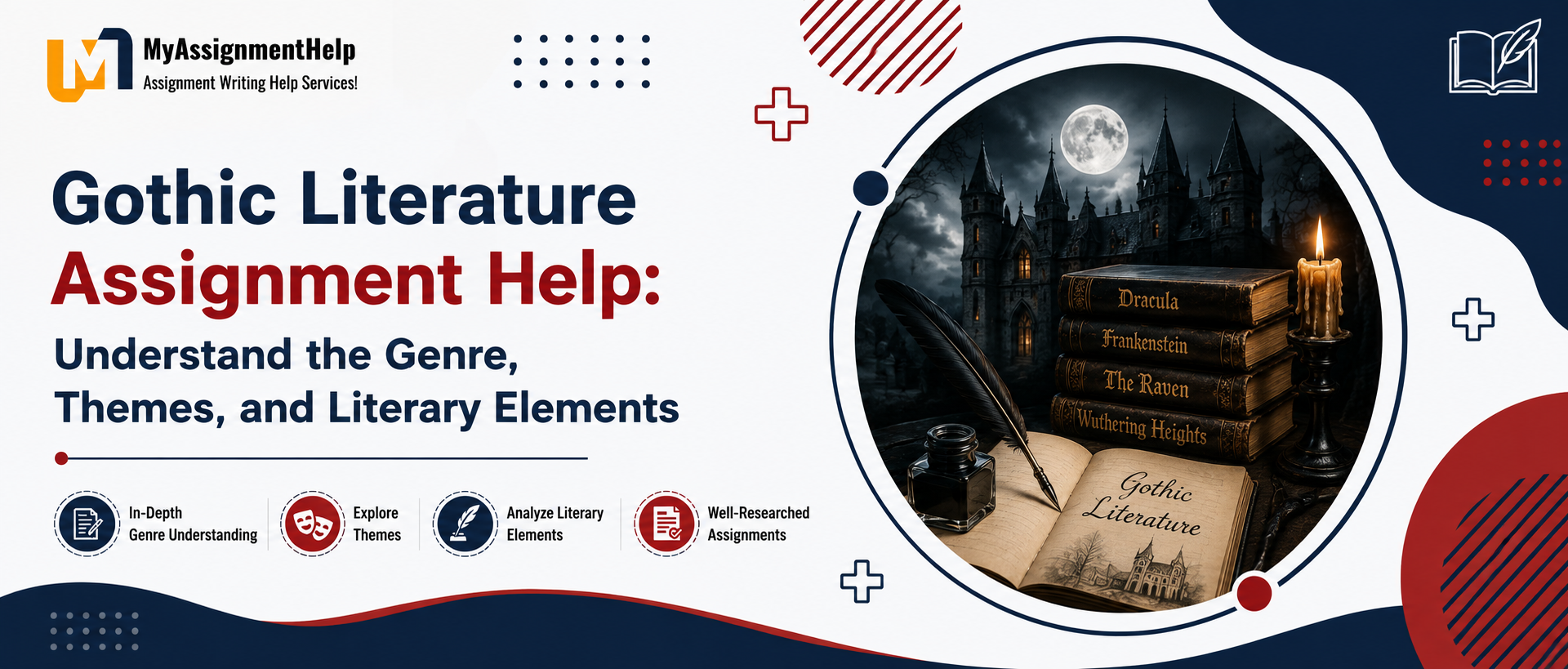
For students, studying Gothic literature can sometimes be challenging because its symbolism, historical background, character development, and hidden meanings require detailed literary analysis. Gothic Literature Assignment Help can provide guidance with understanding texts, developing arguments, analysing themes, and organising academic assignments effectively.
Major Features of Gothic Literature
Gothic writing is recognised for its atmospheric settings, including abandoned castles, ancient mansions, isolated landscapes, ruins, and other mysterious locations. Supernatural events, unexplained occurrences, secrets, curses, and psychological conflicts are also common features.
Important Gothic Themes
Students may encounter several recurring themes while analysing Gothic texts, including:
- Fear and the unknown
- Death and decay
- Isolation and imprisonment
- Madness and psychological conflict
- Good versus evil
- Supernatural forces
- Forbidden knowledge
- Appearance versus reality
- Power and oppression
- Mystery and suspense
These themes often allow writers to explore deeper psychological and social concerns rather than simply creating frightening stories.
Famous Gothic Authors and Works
Several influential writers have shaped Gothic literature. Mary Shelley’s Frankenstein explores ambition, creation, responsibility, and monstrosity, while Edgar Allan Poe is well known for psychological horror and disturbing narratives. Bram Stoker’s Dracula further developed Gothic conventions through its supernatural themes, suspense, and atmosphere.
How Gothic Literature Assignment Help Can Assist Students
A good assignment requires more than simply describing a story. Students need to develop a clear thesis, support arguments with textual evidence, explain literary techniques, and connect themes with the historical and cultural context of the work. MyAssignmentHelp.co.in can help students understand difficult Gothic texts, structure their ideas, improve academic writing, and approach literary analysis with greater confidence.
Whether the assignment focuses on Frankenstein, Dracula, Gothic poetry, Gothic short stories, or another literary text, organised research and critical analysis can make the writing process easier.
Conclusion
Gothic literature remains an important area of literary study because it combines fear, imagination, mystery, emotion, and psychological exploration. Understanding its conventions and recurring themes can help students produce stronger literary analyses. With suitable Gothic Literature Assignment Help, learners can approach complex texts more confidently and develop well-structured academic work.


