
Culturally safe nursing is essential for providing respectful, inclusive, and effective healthcare in Australia. Nursing students must understand how cultural backgrounds, beliefs, languages, and personal experiences influence a patient’s healthcare needs. A well-structured culturally safe nursing assignment explains how nurses can recognise cultural differences, challenge personal biases, and create an environment where every patient feels respected and understood.
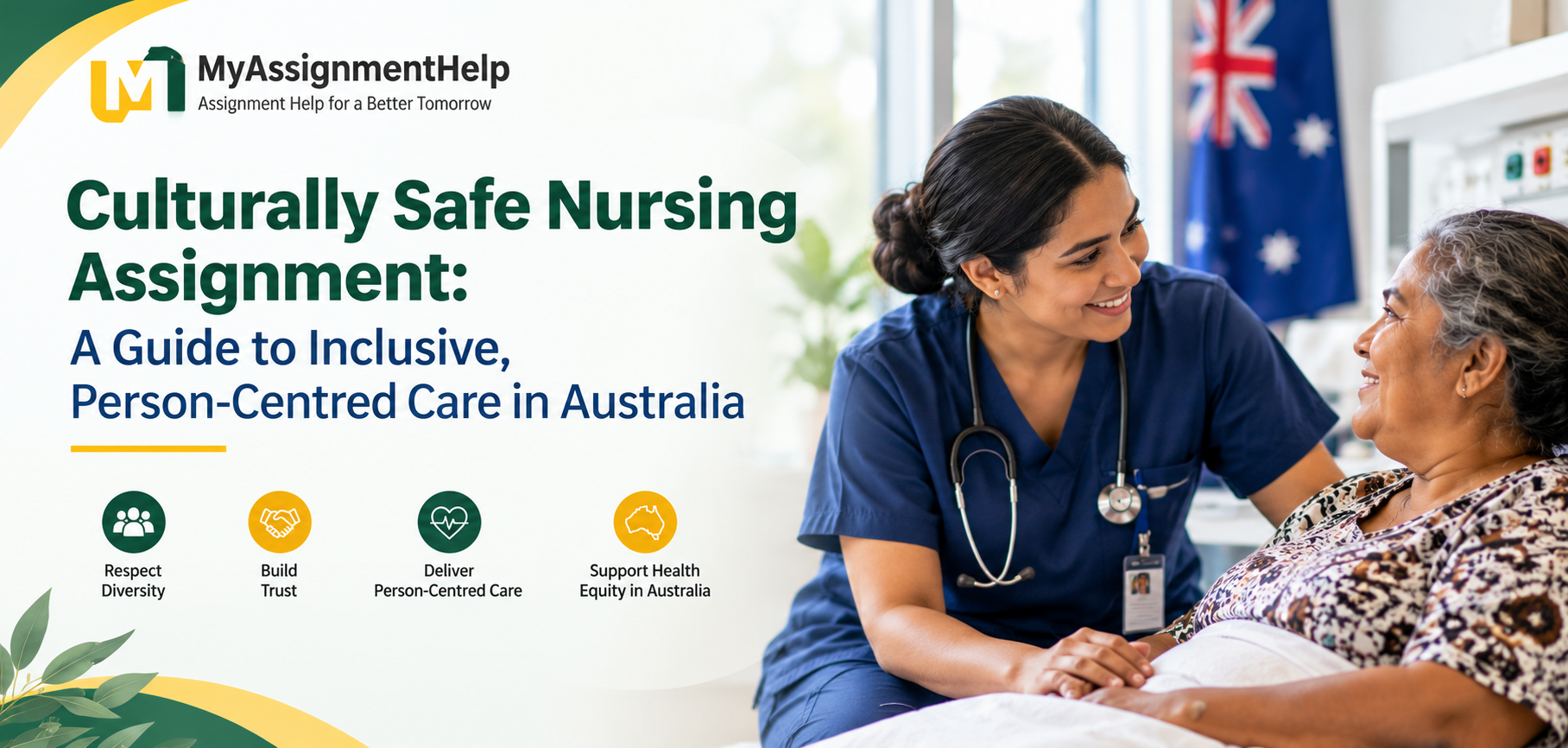
Australian nursing education emphasises person-centred care, professional accountability, and evidence-based practice. By exploring these principles, students can develop stronger academic arguments and understand how culturally safe practices improve patient experiences and healthcare outcomes.
What Is Culturally Safe Nursing?
Culturally safe nursing assignment means providing care that respects a person’s cultural identity, values, beliefs, and lived experiences. It also involves recognising power imbalances and ensuring that patients feel safe, heard, and respected during healthcare interactions.
In Australia, cultural safety is particularly important when caring for Aboriginal and Torres Strait Islander peoples, culturally and linguistically diverse communities, migrants, and international patients.
A culturally safe nurse listens without judgment, communicates clearly, respects individual choices, and avoids assumptions based on a patient’s background.
Why Is Cultural Safety Important in Australian Nursing?
Cultural safety helps nurses build trust, reduce communication barriers, and provide equitable healthcare. It also encourages healthcare professionals to reflect on their attitudes and improve their clinical decision-making.
Respecting Aboriginal and Torres Strait Islander Peoples
Nurses should understand the ongoing effects of colonisation, discrimination, and historical injustices on Aboriginal and Torres Strait Islander peoples’ experiences of healthcare. Respecting community connections, cultural practices, family involvement, and individual preferences can help create more supportive care environments.
For example, a nurse may ask a patient whether they would like a family member or Aboriginal Health Worker involved in discussions about treatment, rather than making assumptions about their preferences.
Supporting Culturally Diverse Patients
Patients may have different beliefs about illness, medication, family responsibilities, and treatment decisions. Nurses should ask respectful questions and arrange qualified interpreters when needed.
These approaches help students demonstrate an understanding of person-centred nursing Australia and explain how individual preferences can influence safe clinical practice.
How Can Students Structure a Culturally Safe Nursing Assignment?
A strong assignment combines academic evidence, critical reflection, practical examples, and relevant Australian nursing standards.
1. Introduce the Topic
Define cultural safety and explain why it matters in contemporary Australian healthcare. Briefly outline the main arguments and identify the nursing context being discussed.
2. Discuss Relevant Nursing Standards
Refer to applicable Nursing and Midwifery Board of Australia (NMBA) standards and professional guidance. Explain how nurses can demonstrate respectful communication, professional accountability, and culturally responsive care.
3. Use Evidence-Based Research
Support key arguments with credible journal articles, Australian healthcare publications, and relevant professional guidelines. Explain how the evidence supports your discussion rather than simply listing research findings.
This strengthens your understanding of evidence-based nursing Australia and demonstrates your ability to connect research with clinical practice.
4. Include a Practical Example
Consider a patient who has difficulty understanding medical instructions because English is not their first language. A culturally responsive nurse arranges an interpreter, explains the treatment options in accessible language, and checks the patient’s understanding before proceeding.
Use this example to analyse communication, informed consent, patient autonomy, and safety.
5. Conclude With Key Insights
Summarise how cultural awareness, reflective practice, and respectful communication contribute to safer nursing care. Avoid introducing new arguments in the conclusion.
What Role Does Reflection Play in Cultural Safety?
Reflection allows nursing students to examine their assumptions, recognise unconscious biases, and identify opportunities for professional development.
A reflective assignment should explain what the student learned, how the experience influenced their perspective, and what actions they would take in future clinical situations.
For example, a student might recognise that they previously assumed every patient preferred the same approach to family involvement. Reflection can help them understand why asking each patient about their preferences is more respectful and appropriate.
Students seeking Australian healthcare assignment help can benefit from guidance on organising reflective writing, evaluating academic sources, and connecting theoretical concepts with nursing practice.
How Can Students Improve Their Assignment Quality?
Follow these practical steps:
- Read the assignment question and marking rubric carefully.
- Use recent, credible Australian nursing and healthcare sources.
- Explain concepts in your own words and cite sources accurately.
- Connect cultural safety principles with realistic nursing scenarios.
- Maintain a clear academic structure and logical flow.
- Proofread for grammar, referencing accuracy, and clarity.
Students should also check their institution’s academic integrity requirements and ensure that submitted work reflects their own understanding.
Frequently Asked Questions
1. What is the main purpose of a culturally safe nursing assignment?
Its purpose is to demonstrate how nurses can respect cultural identities, address power imbalances, communicate effectively, and provide inclusive, patient-centred healthcare.
2. Which Australian nursing standards are relevant to cultural safety?
Relevant guidance includes the NMBA Registered Nurse Standards for Practice and applicable NMBA codes and guidelines. Students should consult current official publications and follow their assignment requirements.
3. How does person-centred nursing support cultural safety?
Person-centred nursing recognises each patient’s preferences, values, circumstances, and healthcare goals. It encourages shared decision-making and individualised care.
4. Why is evidence important in a nursing assignment?
Evidence supports academic arguments, demonstrates critical thinking, and helps students explain how research and professional guidance inform safe nursing practice.
5. How can students improve their culturally safe nursing assignment?
Students can improve their work by using credible Australian sources, including relevant clinical examples, reflecting critically on cultural assumptions, following the rubric, and checking their referencing.
Conclusion
A well-written culturally safe nursing assignment demonstrates how respect, reflection, communication, and professional accountability contribute to inclusive Australian healthcare. By integrating person-centred principles, credible research, and practical nursing examples, students can produce clear, evidence-informed academic work that reflects the importance of culturally responsive care.
For additional academic guidance, BookMyEssay can support students with assignment planning, editing, research organisation, and referencing while encouraging independent learning and academic integrity.


